
Biodiversity Conservation Projects Under CSR in India: How Corporate India is Protecting Nature While Creating Social Impact?
The Silent Crisis Happening Around Us
A farmer in Maharashtra notices fewer bees visiting his crops.
A fisherman along India’s coastline reports declining fish catches.
A village near a forest experiences increasing human-animal conflicts.
At first glance, these may appear to be isolated incidents. In reality, they are warning signs of a much larger crisis—biodiversity loss.
Every disappearing species, shrinking forest, polluted river, and degraded wetland weakens the ecological systems that support human life and economic growth.
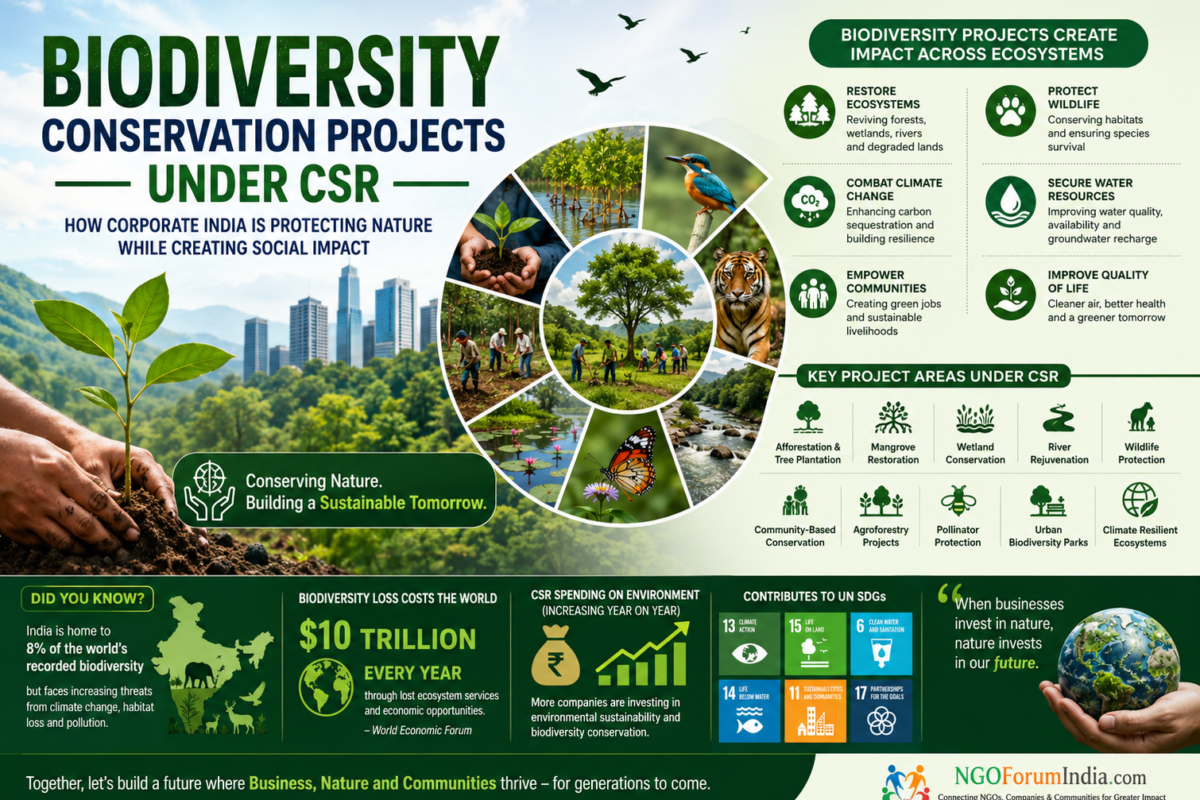
Biodiversity Conservation Projects Under CSR in India is home to nearly 8% of the world’s recorded biodiversity despite occupying only about 2.4% of the Earth’s land area. This extraordinary natural wealth supports agriculture, water security, livelihoods, climate regulation, and public health.
Yet biodiversity is under unprecedented pressure.
Climate change, urbanization, pollution, habitat destruction, and unsustainable resource extraction are accelerating ecosystem degradation across the country.
This challenge has created an important opportunity for Corporate India.
Through Biodiversity Conservation Projects Under CSR, companies are increasingly investing in ecosystem restoration, afforestation, wildlife conservation, wetland protection, and climate-resilient development.
These initiatives are no longer viewed as charitable activities alone. They are becoming strategic investments in sustainability, ESG performance, climate resilience, and long-term business continuity.
Why Biodiversity Matters to Businesses and Society
Biodiversity refers to the variety of life on Earth, including:
- Plants
- Animals
- Microorganisms
- Ecosystems
- Genetic diversity within species
Healthy ecosystems provide services that businesses depend on every day.
Key Ecosystem Services
| Ecosystem Service | Business Benefit |
|---|---|
| Pollination | Agricultural productivity |
| Forests | Carbon sequestration |
| Wetlands | Flood control |
| Rivers | Water supply |
| Mangroves | Coastal protection |
| Biodiversity | Climate resilience |
Without biodiversity, entire economic sectors become vulnerable.
Agriculture, pharmaceuticals, tourism, food processing, forestry, fisheries, and manufacturing all rely directly or indirectly on functioning ecosystems.
The World Economic Forum estimates that more than half of global GDP is moderately or highly dependent on nature.
For companies, biodiversity loss is increasingly becoming a business risk.
Biodiversity Conservation Under India’s CSR Framework
The Companies Act, 2013 has transformed the CSR landscape in India.
Schedule VII specifically recognizes environmental sustainability and ecological balance as eligible CSR activities.
Relevant CSR themes include:
- Environmental sustainability
- Ecological balance
- Protection of flora and fauna
- Conservation of natural resources
- Maintaining quality of soil, air, and water
This legal framework has encouraged thousands of companies to invest in meaningful environmental projects.
Organizations seeking project development support can explore NGOForumIndia.com‘s internal resources on:
For policy guidance, organizations should refer to:
- Ministry of Corporate Affairs (MCA)
- National Biodiversity Authority (NBA)
- Ministry of Environment, Forest and Climate Change (MoEFCC)
Major Types of Biodiversity Conservation Projects Under CSR
1. Afforestation and Tree Plantation Projects
Tree plantation remains one of the most popular CSR biodiversity interventions in India.
Modern CSR projects focus on:
- Native species restoration
- Community forests
- Urban green belts
- Watershed plantations
- Agroforestry systems
Benefits
- Carbon sequestration
- Soil conservation
- Groundwater recharge
- Livelihood generation
- Habitat restoration
Did You Know?
A mature tree can absorb approximately 20–25 kilograms of carbon dioxide annually, making afforestation a critical climate action strategy.
2. Mangrove Restoration Projects
Mangroves are among the world’s most productive ecosystems.
They:
- Protect coastlines from storms
- Prevent erosion
- Support fisheries
- Store significant carbon
Many companies operating near coastal regions have launched mangrove restoration programs.
CSR Impact Areas
- Coastal resilience
- Climate adaptation
- Livelihood protection
- Carbon sequestration
Mangrove ecosystems can store up to four times more carbon than many terrestrial forests.
3. Wetland Conservation Projects
Wetlands are often called Earth’s kidneys.
They naturally filter water, reduce flooding, recharge groundwater, and support wildlife.
CSR-funded wetland initiatives commonly include:
- Restoration of degraded wetlands
- Community stewardship programs
- Bird habitat conservation
- Water quality monitoring
Business Benefits
- Improved water security
- Enhanced ESG performance
- Community goodwill
- Climate adaptation benefits
4. River Rejuvenation Projects
Water scarcity is becoming one of India’s biggest sustainability challenges.
Many CSR programs are investing in:
- River restoration
- Watershed development
- Desiltation
- Riparian plantation
- Community water governance
Outcomes
- Increased groundwater recharge
- Improved water quality
- Enhanced agricultural productivity
- Reduced climate vulnerability
5. Wildlife Protection Initiatives
Wildlife conservation is increasingly attracting CSR funding.
Projects may include:
- Habitat restoration
- Anti-poaching support
- Wildlife corridors
- Community conservation programs
- Human-wildlife conflict mitigation
These interventions help preserve biodiversity while supporting local livelihoods.
Looking for CSR partners, ESG experts, biodiversity project design, or climate finance support?
Contact us for CSR Biodiversity Project Design, Funding Strategy, ESG Alignment, Carbon Finance Advisory, and NGO Partnership Development.
Agro, motivation,spirituality, counsiling