 Smita
Smita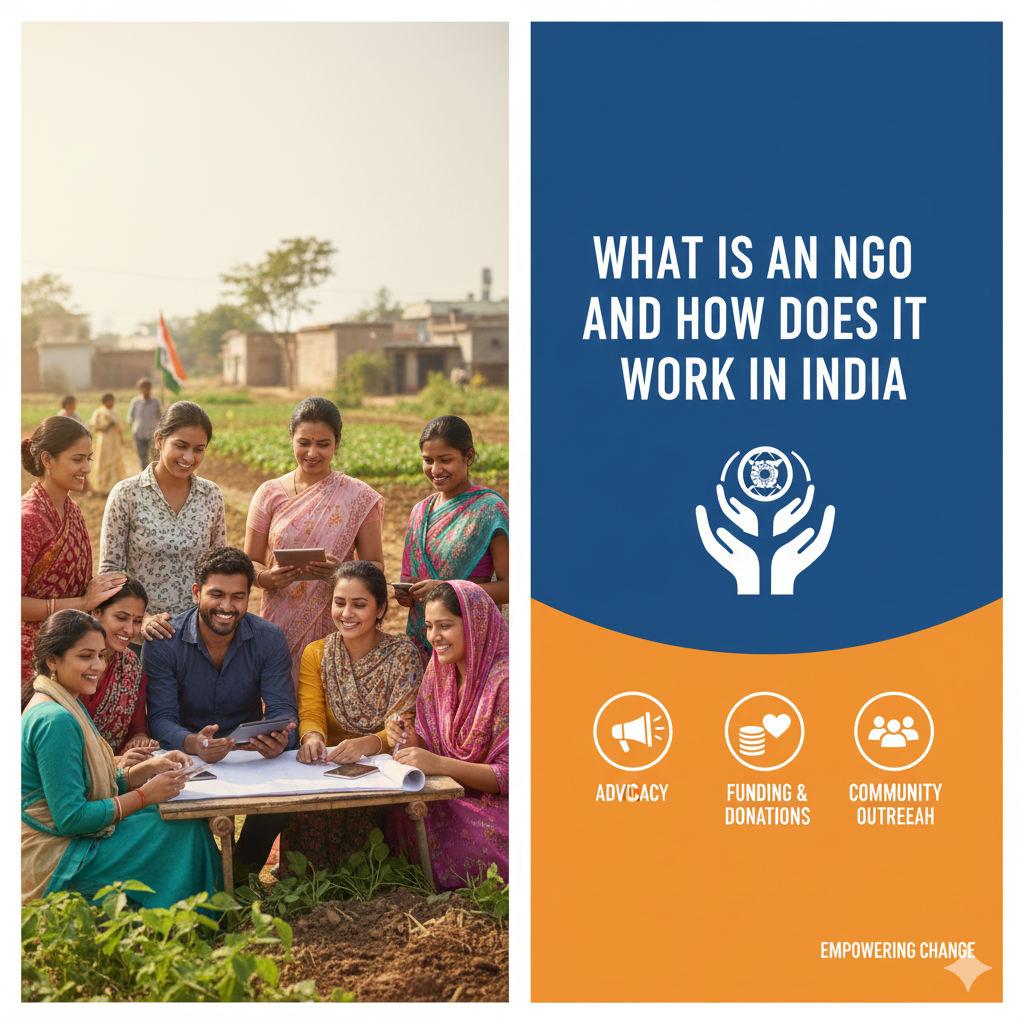
What Is an NGO and How Does It Work in India?
What Is an NGO and How Does It Work in India?
Overview
The social, economic, and developmental environment of India is significantly shaped by non-governmental organizations, or NGOs. NGOs play a crucial role as a link between the government and the populace in a country as large and diverse as India, where issues like poverty, illiteracy, healthcare access, gender inequity, environmental degradation, and rural development continue to exist. They strengthen grassroots communities, fill in service gaps, and support government programs.
The NGO sector in India has grown significantly during the last few decades. These days, thousands of groups work in a variety of fields, including education, healthcare, human rights, disaster relief, women’s empowerment, child welfare, environmental conservation, and skill development. Many people still have basic questions about NGOs despite their increasing influence: What is an NGO? How does it work? In India, how are NGOs funded, registered, and governed?
An NGO: What Is It?
An NGO, or non-governmental organization, is a volunteer, non-profit organization founded by people or groups to pursue humanitarian, social welfare, or development goals. Although they may work with governmental, private, or international organizations, NGOs function independently of the government.
An NGO’s main goal is to serve the public interest rather than make money. Instead of being divided among members, any excess is reinvested in accomplishing the organization’s objectives.
Important Features of NGOs
- Nonprofit The natural world
Profits are not given to owners or members by NGOs. They only donate their earnings to charitable causes.
- Willingness to Participate
People motivated by civic duty, empathy, or social devotion frequently found NGOs.
- Independent Governance
While NGOs may receive government funding, they operate independently and are not controlled by the government.
- Social or Developmental Mission
NGOs focus on issues like education, health, environment, poverty alleviation, women empowerment, and human rights.
- Legal Recognition
NGOs in India must be registered under specific laws to operate legally.
History and Evolution of NGOs in India
The concept of voluntary organizations in India dates back to the pre-independence era. Social reformers and freedom fighters established charitable institutions, trusts, and associations to promote education, social reform, and national consciousness.
After independence, NGOs gained prominence as development partners, especially in rural development and poverty alleviation. Over time, globalization, international funding, and increased civic awareness accelerated the growth of the NGO sector.
Today, India has one of the largest NGO networks in the world, contributing significantly to social transformation and inclusive development.
NGOs in India
NGOs in India can be categorized according to their operating strategy, focal area, and organizational structure.
-
In accordance with the law
-
Trusts
The Indian Trusts Act or applicable state trust laws govern the establishment of trusts. They are frequently utilized for religious and charitable causes.
-
Societies
The Societies Registration Act of 1860 governs the registration of societies. They are member-based groups that frequently work in social welfare, culture, and education.
-
Section 8 Businesses
These businesses are registered under the Companies Act as non-profits. Large NGOs are increasingly choosing them because they provide better governance and transparency.
-
Considering Operational Scope
- Community-based NGOs: They function at the local or village level.
- State-level NGOs: They operate in several districts or areas.
- National NGOs: Operate in multiple states
- International NGOs: Do business internationally or get assistance from abroad
-
Considering the Focus Area
- Literacy and education
- Nutrition and health
- Development of women and children
- preservation of the environment
- Legal assistance and human rights
- Employment and skill development
- Relief and rehabilitation following disasters
How Indian NGOs Operate
NGOs use a systematic approach that includes problem identification, solution formulation, resource mobilization, and program implementation.
Step 1: Recognizing Social Problems
NGOs start by evaluating the needs of the community through surveys, field research, interviews, and engagement with the local populace. These evaluations aid in their comprehension of actual human difficulties.
Step 2: Establishing Programs and Goals
NGOs create projects that are in line with their mission and set clear goals based on their results. For instance, a health NGO would concentrate on maternal care, whereas an education NGO might concentrate on increasing school enrollment.
Step 3: Legal Registration and Compliance
To function legally, NGOs must register under applicable laws. They must also comply with tax regulations, file annual reports, and maintain proper accounts.
Step 4: Fundraising and Resource Mobilization
NGOs raise funds through:
- Donations from individuals
- Corporate Social Responsibility (CSR) contributions
- Government grants
- Membership fees
- Fundraising campaigns
Step 5: Project Implementation
Once funding is secured, NGOs execute their programs on the ground. This involves hiring staff, training volunteers, collaborating with local authorities, and monitoring progress.
Step 6: Monitoring and Evaluation
Regular evaluation helps NGOs measure impact, ensure accountability, and improve program effectiveness. Reports are shared with donors and regulatory authorities.
Funding Sources for NGOs in India
Funding is the backbone of NGO operations. Indian NGOs rely on diverse sources to sustain their activities.
-
Individual Donations
Public donations form a major source of income for many NGOs. Tax benefits often encourage charitable giving.
-
Corporate Social Responsibility (CSR)
Indian companies are legally required to spend a portion of their profits on CSR activities. NGOs partner with corporations to implement CSR projects.
-
Government Grants
Various ministries provide grants for education, health, women empowerment, rural development, and environmental projects.
-
Foreign Contributions
Some NGOs receive international funding, subject to regulatory approval and compliance requirements.
NGOs are governed by a legal and regulatory framework.
In India, a number of regulations govern NGOs to provide accountability and openness.
Registration Laws
- Indian Trusts Act
- Societies Registration Act
- Companies Act (Section 8)
Tax Exemptions
NGOs can apply for tax exemptions, allowing donors to claim deductions and enabling NGOs to utilize funds efficiently.
Financial Reporting
NGOs must maintain audited financial records and submit annual returns to regulatory authorities.
Role of NGOs in India’s Development
NGOs play a transformative role in India’s social ecosystem.
-
Bridging Development Gaps
NGOs reach marginalized communities where government services may not be easily accessible.
-
Promoting Social Awareness
They raise awareness about education, health, sanitation, environmental protection, and legal rights.
-
Empowering Women and Youth
Many NGOs focus on self-help groups, skill training, entrepreneurship, and leadership development.
-
Supporting Government Initiatives
NGOs often collaborate with government schemes to improve implementation and outreach.
Challenges Faced by NGOs in India
Despite their impact, NGOs face several challenges:
- Funding constraints
- Regulatory compliance burden
- Lack of skilled manpower
- Limited public trust in some cases
- Operational challenges in remote areas
Addressing these challenges requires policy support, transparency, and stronger community engagement.
Importance of Transparency and Accountability
Transparency is essential for maintaining public trust. NGOs are increasingly adopting digital reporting, impact assessments, and governance frameworks to demonstrate accountability.
Clear communication, ethical practices, and strong leadership are critical for long-term sustainability.
Future of NGOs in India
The future of NGOs in India looks promising as social awareness grows and technology enables better outreach. Digital platforms, data-driven decision-making, and collaborations with private and public sectors are shaping the next phase of NGO development.
As India progresses toward inclusive growth, NGOs will remain key partners in achieving social equity and sustainable development.
Conclusion: What Is an NGO and How Does It Work in India?
NGOs are an integral part of India’s social and developmental framework. By addressing critical issues, empowering communities, and supplementing government efforts, they contribute significantly to nation-building. Understanding what an NGO is and how it works in India helps citizens appreciate their value and encourages greater participation in social change.
With proper regulation, transparency, and support, NGOs will continue to play a vital role in shaping a more equitable and sustainable future for India.
Dubai Asia Cup 2025 Highlights: India Clinch Title in Thrilling Final in Dubai
Dubai Asia Cup 2025 Highlights: India Clinch Title in Thrilling Final in Dubai