 Smita
Smita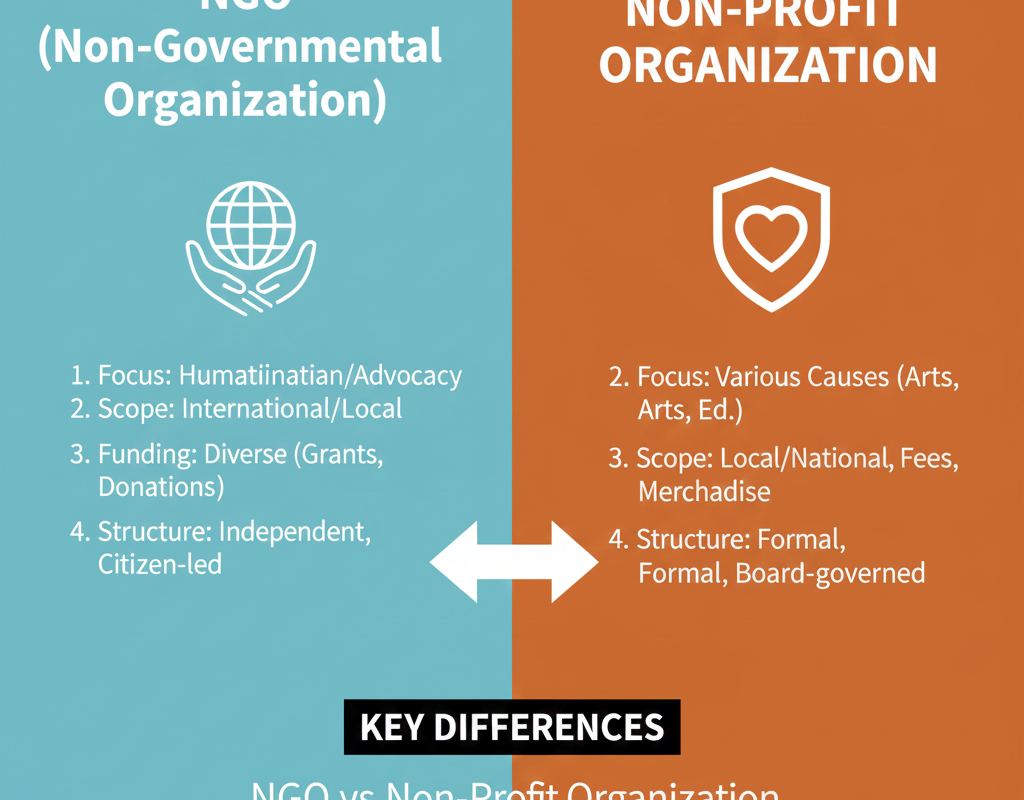
NGO vs Non-Profit Organization एनजीओ बनाम गैर-लाभकारी संगठन:
NGO vs Non-Profit Organization एनजीओ बनाम गैर-लाभकारी संगठन:
Overview
Although they are sometimes used synonymously, non-governmental organizations (NGOs) and non-profit organizations (NPOs) are not the same. Both are vital to social welfare, humanitarian help, and societal development, but individuals, donors, and volunteers must recognize the differences between them. Understanding the distinctions might aid in making well-informed choices regarding cooperation, fundraising, or volunteering in India, where civil society has expanded quickly.
An NGO: What is it?
A voluntary group that functions without interference from the government is known as a non-governmental organization, or NGO. Its primary aim is to address social, cultural, or environmental issues, such as education, healthcare, human rights, poverty alleviation, and disaster relief. NGOs rely heavily on donations, grants, and volunteer support to implement their programs.
Key features of an NGO include:
- Voluntary Organization: Operates independently from government control.
- Mission-Oriented: Focuses on social welfare, humanitarian aid, or advocacy.
- Funding: Relies on donations, grants, and partnerships.
- Non-Profit Nature: Profits are reinvested in achieving organizational goals.
- Global or Local Presence: Can operate locally, nationally, or internationally.
In India, NGOs are governed under the Societies Registration Act, Indian Trusts Act, or the Companies Act (Section 8 companies).
A Non-Profit Organization (NPO): What is it?
An organization that functions for objectives other than producing money is known as a non-profit organization. Not all NPOs are NGOs, even though they belong to the NPO category. Charities, schools, hospitals, cultural institutions, and religious organizations are examples of NPOs. Rather than making money, their main goal is to provide services.
Important characteristics of a NPO consist of:
- Non-Profit Nature: Profits, if any, are used for organizational goals.
- Legal Recognition: Registered by a number of laws, frequently with exemptions from taxes.
- Diverse Goals: May concentrate on community development, healthcare, education, religion, or culture.
- Funding: Primarily funded through donations, endowments, grants, or membership fees.
- Accountability: Must follow statutory reporting and auditing requirements.
The Indian Legal System
- NGOs: May sign up under
- Voluntary associations are covered by the Societies Registration Act of 1860.
- For benevolent trusts, see the Indian Trusts Act of 1882.
- For nonprofit organizations, see Section 8 of the Companies Act of 2013.
- NPOs can register under comparable regulations and take advantage of tax benefits under Sections 12A and 80G of the Income Tax Act of 1961.
Both are required to submit yearly reports, be audited, and maintain transparency in the use of funds.
Operational Differences
- Focus Areas: NGOs often concentrate on advocacy, awareness campaigns, and rights-based initiatives, whereas NPOs might focus on direct services like education, healthcare, or shelter.
- Global Presence: Many NGOs operate internationally and are involved in policy advocacy, while NPOs are often local or national.
- Volunteer Engagement: NGOs heavily depend on volunteers and partnerships. NPOs may have structured paid staff along with volunteers.
Effects on the Community
NPOs and NGOs have a big influence on society:
- delivering healthcare and education.
- assistance and rehabilitation following a disaster.
- Environmental conservation.
- Women empowerment and child welfare programs.
- Advocacy for human rights and policy changes.
In India, organizations like CRY (Child Rights and You), Smile Foundation, and Goonj are examples of NGOs, while hospitals, educational trusts, and charitable organizations represent NPOs.
Typical Misconceptions
- NGO = NPO: All NGOs are NPOs, however not all NPOs are NPOs.
- Profit-making is permitted, but personal profit is not permitted. Both parties must reinvest any excess profits back into their goals.
- Only NGOs receive donations: NPOs are funded by grants and donations as well.
Choosing Between NGO and NPO for Collaboration or Volunteering
- Mission Alignment: Check if the organization’s mission matches your interests.
- Transparency and Accountability: Review reports, audits, and impact metrics.
- Volunteer Opportunities: NGOs may offer advocacy and fieldwork roles, while NPOs may offer structured service roles.
- Legal Status: Verify registration, tax exemptions, and compliance with Indian laws.
In conclusion: NGO vs Non-Profit Organization
Donors, volunteers, and legislators must comprehend the distinctions between NGOs and NPOs. While NPOs offer direct services and community support, NGOs typically concentrate on campaigning and social change. Both are essential to creating a society that is just and compassionate. The operational and legal frameworks in India guarantee these organizations’ sustainability, efficacy, and accountability.
One can make well-informed choices about involvement, contributions, and partnerships by acknowledging their distinctive qualities. The growing sense of social welfare and civic duty in India is seen in both NPOs and NGOs.
परिचय:
यद्यपि गैर-सरकारी संगठन (एनजीओ) और गैर-लाभकारी संगठन (एनपीओ) को कभी-कभी पर्यायवाची के रूप में प्रयोग किया जाता है, लेकिन ये एक समान नहीं हैं। सामाजिक कल्याण, मानवीय सहायता और समाज के विकास के लिए दोनों ही महत्वपूर्ण हैं, लेकिन व्यक्तियों, दानदाताओं और स्वयंसेवकों को इनके बीच के अंतर को समझना आवश्यक है। इन अंतरों को समझने से भारत में सहयोग, धन जुटाने या स्वयंसेवा के संबंध में सोच-समझकर निर्णय लेने में सहायता मिल सकती है, जहाँ नागरिक समाज का तेजी से विस्तार हुआ है।
गैर सरकारी संगठन (एनजीओ): यह क्या है?
सरकार के हस्तक्षेप के बिना कार्य करने वाले स्वैच्छिक समूह को गैर सरकारी संगठन (एनजीओ) कहा जाता है। इसका प्राथमिक उद्देश्य शिक्षा, स्वास्थ्य सेवा, मानवाधिकार, गरीबी उन्मूलन और आपदा राहत जैसे सामाजिक, सांस्कृतिक या पर्यावरणीय मुद्दों का समाधान करना है। एनजीओ अपने कार्यक्रमों को कार्यान्वित करने के लिए दान, अनुदान और स्वयंसेवी सहायता पर बहुत अधिक निर्भर करते हैं।
एनजीओ की प्रमुख विशेषताएं इस प्रकार हैं:
- स्वैच्छिक संगठन: सरकार के नियंत्रण से स्वतंत्र रूप से कार्य करता है।
- उद्देश्य-उन्मुख: सामाजिक कल्याण, मानवीय सहायता या वकालत पर केंद्रित होता है।
- वित्तपोषण: दान, अनुदान और साझेदारी पर निर्भर करता है।
- गैर-लाभकारी प्रकृति: लाभ को संगठनात्मक लक्ष्यों की प्राप्ति में पुनर्निवेशित किया जाता है।
- वैश्विक या स्थानीय उपस्थिति: स्थानीय, राष्ट्रीय या अंतरराष्ट्रीय स्तर पर कार्य कर सकता है।
भारत में, एनजीओ को सोसायटी पंजीकरण अधिनियम, भारतीय ट्रस्ट अधिनियम या कंपनी अधिनियम (धारा 8 कंपनियों) के तहत शासित किया जाता है।
गैर-लाभकारी संगठन (एनपीओ): यह क्या है?
एक ऐसा संगठन जो धन कमाने के अलावा अन्य उद्देश्यों के लिए कार्य करता है, उसे गैर-लाभकारी संगठन कहा जाता है। सभी एनपीओ गैर-सरकारी संगठन (एनजीओ) नहीं होते, भले ही वे एनपीओ श्रेणी में आते हों। चैरिटी संस्थाएं, स्कूल, अस्पताल, सांस्कृतिक संस्थान और धार्मिक संगठन एनपीओ के उदाहरण हैं। इनका मुख्य उद्देश्य धन कमाना नहीं, बल्कि सेवाएं प्रदान करना होता है।
एनपीओ की महत्वपूर्ण विशेषताएं इस प्रकार हैं:
गैर-लाभकारी प्रकृति: यदि कोई लाभ होता है, तो उसका उपयोग संगठन के उद्देश्यों के लिए किया जाता है।
- कानूनी मान्यता: कई कानूनों के तहत पंजीकृत, अक्सर करों से छूट प्राप्त होती है।
- विविध लक्ष्य: सामुदायिक विकास, स्वास्थ्य सेवा, शिक्षा, धर्म या संस्कृति पर केंद्रित हो सकते हैं।
- वित्तपोषण: मुख्य रूप से दान, अनुदान, अनुदान या सदस्यता शुल्क के माध्यम से वित्तपोषित होते हैं।
- जवाबदेही: वैधानिक रिपोर्टिंग और लेखापरीक्षा आवश्यकताओं का पालन करना अनिवार्य है।
भारतीय कानूनी व्यवस्था
- एनजीओ: पंजीकरण के लिए निम्नलिखित नियमों का पालन कर सकते हैं:
- स्वैच्छिक संस्थाएं 1860 के सोसायटी पंजीकरण अधिनियम के अंतर्गत आती हैं।
- परोपकारी ट्रस्टों के लिए, 1882 का भारतीय ट्रस्ट अधिनियम देखें।
- गैर-लाभकारी संगठनों के लिए, 2013 के कंपनी अधिनियम की धारा 8 देखें।
- एनपीओ (गैर-लाभकारी संगठन) तुलनीय नियमों के तहत पंजीकरण करा सकते हैं और 1961 के आयकर अधिनियम की धारा 12ए और 80जी के तहत कर लाभ प्राप्त कर सकते हैं।
- दोनों को वार्षिक रिपोर्ट प्रस्तुत करना, ऑडिट करवाना और निधियों के उपयोग में पारदर्शिता बनाए रखना अनिवार्य है।
परिचालन संबंधी अंतर
- मुख्य क्षेत्र: एनजीओ अक्सर वकालत, जागरूकता अभियान और अधिकार-आधारित पहलों पर ध्यान केंद्रित करते हैं, जबकि एनपीओ शिक्षा, स्वास्थ्य सेवा या आवास जैसी प्रत्यक्ष सेवाओं पर ध्यान केंद्रित कर सकते हैं।
- वैश्विक उपस्थिति: कई एनजीओ अंतरराष्ट्रीय स्तर पर काम करते हैं और नीतिगत वकालत में शामिल होते हैं, जबकि एनपीओ अक्सर स्थानीय या राष्ट्रीय स्तर पर होते हैं।
- स्वयंसेवकों की भागीदारी: एनजीओ स्वयंसेवकों और साझेदारियों पर अत्यधिक निर्भर होते हैं। गैर-लाभकारी संगठनों में स्वयंसेवकों के साथ-साथ वेतनभोगी कर्मचारी भी हो सकते हैं।
समुदाय पर प्रभाव
गैर-लाभकारी संगठनों (एनपीओ) और गैर-सरकारी संगठनों का समाज पर व्यापक प्रभाव है:
स्वास्थ्य सेवा और शिक्षा प्रदान करना।
आपदा के बाद सहायता और पुनर्वास प्रदान करना।
पर्यावरण संरक्षण।
- महिला सशक्तिकरण और बाल कल्याण कार्यक्रम।
- मानवाधिकारों और नीतिगत परिवर्तनों के लिए वकालत करना।
- भारत में, सीआरवाई (बाल अधिकार और आप), स्माइल फाउंडेशन और गूंज जैसे संगठन गैर-सरकारी संगठनों के उदाहरण हैं, जबकि अस्पताल, शैक्षणिक ट्रस्ट और धर्मार्थ संगठन गैर-लाभकारी संगठनों का प्रतिनिधित्व करते हैं।
आम गलत धारणाएँ
- एनजीओ = एनपीओ: सभी एनजीओ एनपीओ हैं, लेकिन सभी एनपीओ एनपीओ नहीं हैं।
- लाभ कमाना अनुमत है, लेकिन व्यक्तिगत लाभ की अनुमति नहीं है। दोनों पक्षों को किसी भी अतिरिक्त लाभ को अपने लक्ष्यों में पुनः निवेश करना होगा।
- केवल एनजीओ ही दान प्राप्त करते हैं: एनपीओ भी अनुदान और दान से वित्त पोषित होते हैं।
सहयोग या स्वयंसेवा के लिए गैर-सरकारी संगठन (एनजीओ) और गैर-लाभकारी संगठन (एनपीओ) में से चयन
- उद्देश्य का सामंजस्य: जांचें कि क्या संगठन का उद्देश्य आपकी रुचियों से मेल खाता है।
- पारदर्शिता और जवाबदेही: रिपोर्ट, ऑडिट और प्रभाव मापदंडों की समीक्षा करें।
- स्वयंसेवा के अवसर: एनजीओ वकालत और क्षेत्र कार्य की भूमिकाएं प्रदान कर सकते हैं, जबकि एनपीओ संरचित सेवा भूमिकाएं प्रदान कर सकते हैं।
- कानूनी स्थिति: पंजीकरण, कर छूट और भारतीय कानूनों के अनुपालन की पुष्टि करें।
निष्कर्ष में: एनजीओ बनाम गैर-लाभकारी संगठन
दाताओं, स्वयंसेवकों और विधायकों को एनजीओ और एनपीओ के बीच के अंतर को समझना चाहिए। जहां एनपीओ प्रत्यक्ष सेवाएं और सामुदायिक सहायता प्रदान करते हैं, वहीं एनजीओ आमतौर पर अभियान और सामाजिक परिवर्तन पर ध्यान केंद्रित करते हैं। दोनों ही एक न्यायपूर्ण और करुणामय समाज के निर्माण के लिए आवश्यक हैं। भारत में परिचालन और कानूनी ढांचा इन संगठनों की स्थिरता, प्रभावशीलता और जवाबदेही की गारंटी देता है।
इनकी विशिष्ट विशेषताओं को पहचानकर कोई भी भागीदारी, योगदान और साझेदारी के बारे में सोच-समझकर निर्णय ले सकता है। भारत में सामाजिक कल्याण और नागरिक कर्तव्य की बढ़ती भावना एनपीओ और एनजीओ दोनों में देखी जाती है।
West Indies Hosting Australia: Reviving Test Rivalries in the Caribbean in 2025
West Indies Hosting Australia: Reviving Test Rivalries in the Caribbean in 2025