 Smita
Smita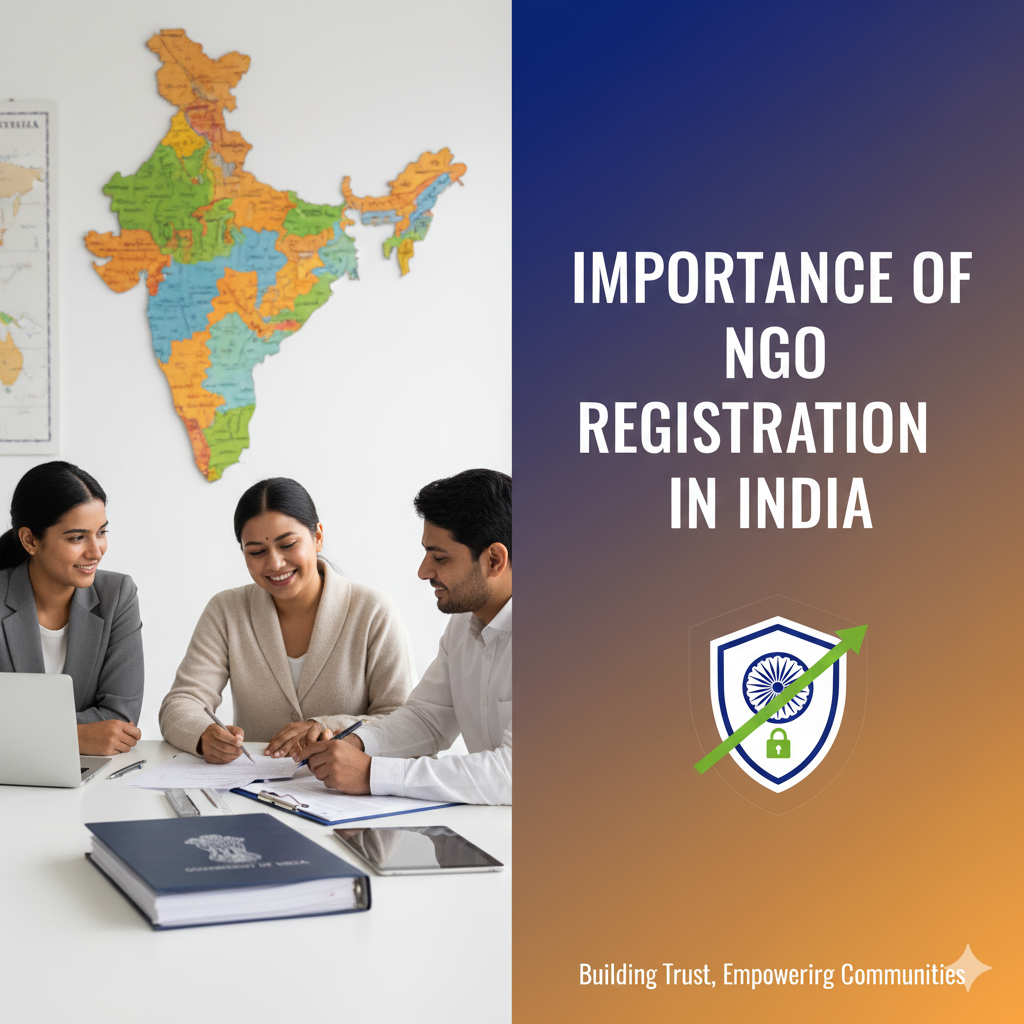
Importance of NGO Registration in India
Importance of NGO Registration in India
Non-Governmental Organizations (NGOs) play a crucial role in shaping India’s social, economic, and cultural development. From education and healthcare to environmental protection, women empowerment, rural development, and human rights advocacy, NGOs act as a bridge between the government and society. However, for any NGO to function effectively, legally, and transparently, registration is the first and most important step.
In India, NGO registration is not merely a legal formality; it is a fundamental requirement that establishes credibility, accountability, and operational legitimacy. With increasing government oversight, donor scrutiny, and public awareness, registered NGOs are better positioned to achieve their mission and create sustainable social impact.
Understanding NGO Registration in India
NGO registration refers to the legal process through which a voluntary organization is formally recognized under Indian law. Registration provides an NGO with a legal identity, allowing it to operate within a regulated framework.
In India, NGOs can be registered under different legal structures, depending on their objectives and mode of operation:
- Trust Registration
- Society Registration
- Section 8 Company Registration
Each structure serves specific purposes but shares the common goal of promoting non-profit activities.
The Significance of NGO Registration in India
-
Legal Recognition and Identity
An NGO’s registration gives it a unique legal identity apart from its members or founders. This acknowledgment enables the company to:
- Make agreements
- Own property
- Create bank accounts
- In its own name, sue or be sued
An NGO cannot operate properly and is not legally recognized if it is not registered.
-
Eligibility for Government Grants and Funding
One of the most significant advantages of NGO registration is eligibility for government grants and schemes. Many central and state government programs support NGOs working in areas such as:
- Education and literacy
- Health and sanitation
- Skill development
- Women and child welfare
- Environmental sustainability
Unregistered NGOs are not eligible to apply for such funding, which limits their scope of operations.
-
Availability of Both Domestic and Foreign Donations
Donations from people, businesses, and organizations are lawfully accepted by registered NGOs. Registration becomes even more important when dealing with foreign contributions, as compliance with regulatory norms is mandatory.
Corporate Social Responsibility (CSR) funding from companies is also restricted to registered and compliant NGOs, making registration essential for financial sustainability.
-
Enhanced Credibility and Public Trust
Registration builds trust and credibility among donors, beneficiaries, volunteers, and government authorities. A registered NGO is perceived as:
- Transparent
- Accountable
- Professionally managed
In an era where misuse of funds and fake charities are major concerns, registration assures stakeholders that the organization operates ethically and legally.
-
Transparency and Accountability
Registered NGOs are required to maintain proper records, including:
- Financial statements
- Annual reports
- Audit reports
- Compliance filings
This promotes transparency and ensures that funds are used solely for charitable purposes. Accountability enhances long-term sustainability and public confidence.
India’s Legal Framework for NGO Registration
India has a strong legal system in place to control NGO operations. Registration ensures compliance with applicable laws and standards.
-
Trust Registration Laws
Trusts are governed by the Indian Trusts Act, where applicable, or state-specific trust laws. They are commonly formed for charitable and religious purposes.
-
Society Registration Laws
Societies are governed by the Societies Registration Act and are suitable for organizations working in education, art, culture, and social welfare.
-
Section 8 Company Regulations
Section 8 companies are registered under the Companies Act and are considered the most structured and transparent form of NGOs, often preferred by corporate donors.
Benefits of Taxation for Registered NGOs
-
Exemptions from income taxes
NGOs that are registered may request for tax exemptions, which would free them from paying taxes on income used only for philanthropic endeavors.
-
Donor Tax Benefits
Due to the possibility of tax benefits, donors are more inclined to make contributions to registered NGOs. Fundraising opportunities are increased as a result.
Importance of NGO Registration for CSR Funding
Corporate Social Responsibility has become a major source of funding for NGOs in India. Companies prefer partnering with registered NGOs that comply with legal and ethical standards.
Registration ensures:
- Eligibility for CSR projects
- Long-term corporate partnerships
- Enhanced visibility and reputation
Unregistered NGOs are excluded from this significant funding channel.
Registered NGOs’ Function in National Development
By supporting government initiatives, registered NGOs make a substantial contribution to India’s development goal.
-
Learning and Developing Skills
NGOs run schools, vocational training centers, and awareness programs that help bridge the education gap, especially in rural and underserved areas.
-
Healthcare and Public Health
Many NGOs provide affordable healthcare services, conduct medical camps, and promote health awareness, reducing pressure on public health infrastructure.
-
Women Empowerment and Gender Equality
Registered NGOs work actively on issues like women’s education, employment, health, and legal rights, contributing to social equality.
-
Environmental Protection
Environmental NGOs promote conservation, sustainable practices, and climate awareness, playing a key role in environmental protection.
Advantages of Compliance and Governance
The following good governance measures are enforced by registration:
- Clearly defined goals
- A well-defined management framework
- Frequent audits
- Legal responsibility
By reducing resource misuse, these procedures guarantee that NGOs run morally and effectively.
Safeguarding Organizational Resources
Assets like land, buildings, cars, and equipment are legally owned by registered NGOs. This shields company property from individual misuse or personal disagreements.
NGOs’ Long-Term Sustainability
Registration facilitates long-term expansion planning for NGOs by allowing:
- Organized activities
- Strategic alliances
- Stability of funding
- Legal continuity
Due to financial and legal limitations, an unregistered NGO frequently finds it difficult to expand.
Difficulties Unregistered NGOs Face
NGOs that operate without registration run the following risks:
- Absence of legal defense
- Not being able to receive financing
- Insufficient credibility
- Penalties or closure risk
These difficulties significantly limit an organization’s capacity to successfully serve society.
Government Surveillance and Policy Coordination
NGOs that are registered are more in line with national policy and development objectives. Government oversight guarantees that NGOs:
- Act within the bounds of the law
- Prevent financial mismanagement
- Make a constructive contribution to society
The NGO sector as a whole is strengthened by this connection.
NGO Registration and Digital Transformation
The digitization of compliance processes makes it simple for registered NGOs to handle:
- Online submissions
- Reporting on finances
- Disclosures of transparency
This lowers administrative hassles and increases efficiency.
Measuring and Reporting Social Impact
NGOs that are registered are better able to quantify and disclose their social impact. Structured reporting is beneficial.
- Draw in donors
- Enhance programs
- Exhibit responsibility
Impact measurement is becoming more and more crucial for collaborations and funding.
In conclusion: Importance of NGO Registration in India
It is impossible to exaggerate the significance of NGO registration in India. A legal basis, increased credibility, openness, and access to partnerships and finance are all made possible by registration. It enables NGOs to function efficiently, ethically, and sustainably while making a significant contribution to the advancement of the country.
Registered NGOs function as change agents in India, a large and diverse nation, tackling societal issues that call for group effort. NGO registration is a must for any group dedicated to social welfare, not only an option.
Asia Cup 2025 Man of the Tournament: How Abhishek Sharma Dominated the Stage
Asia Cup 2025 Man of the Tournament: How Abhishek Sharma Dominated the Stage